



What Is Better to Choose – FLAXSEEDS or CHIA SEEDS?


Both seeds are nutrient-rich foods, but each of them has its own distinct advantages. Let’s compare flaxseeds and chia seeds to understand which nutrients and properties make each of them stand out.
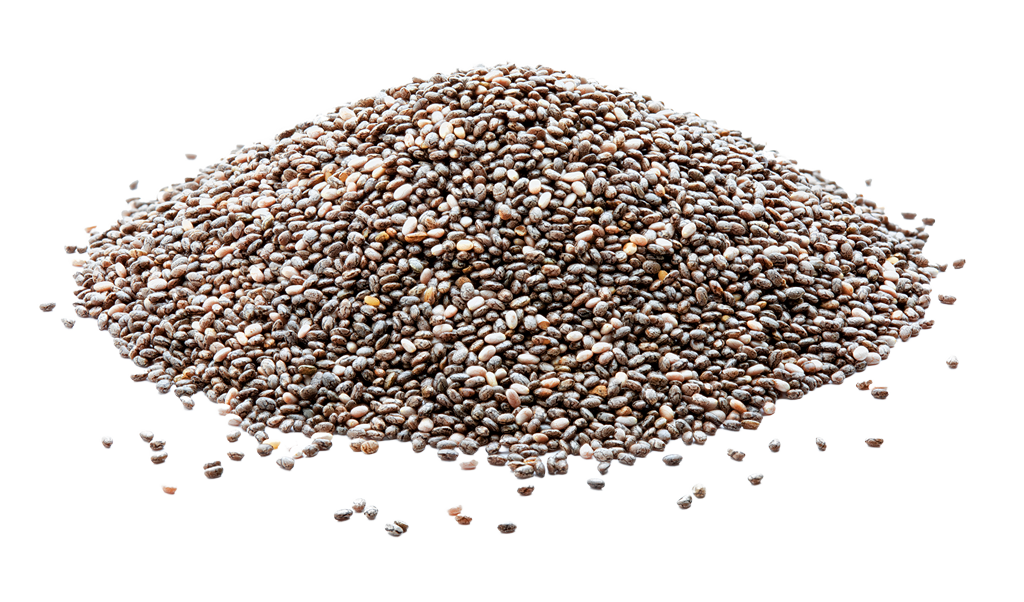
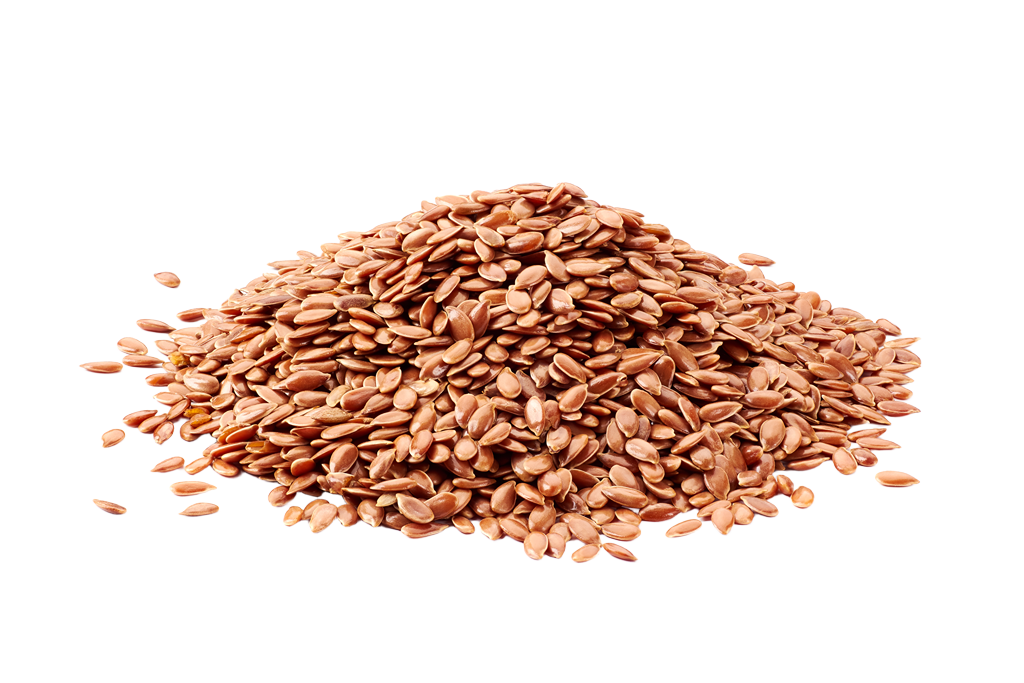
What Is Especially Valuable in Flaxseeds?
- Alpha-linolenic acid omega-3 fatty acids (ALA). Flaxseeds are one of the richest plant sources of ALA. ALA is an essential fatty acid that helps maintain normal blood cholesterol levels. The beneficial effect is obtained with a daily intake of 2 g of ALA. [1;2]
The human body can partially convert ALA into other important Omega-3 forms — EPA (eicosapentaenoic acid) and DHA (docosahexaenoic acid), which are found in fish, although this conversion is not very efficient. [3]
- Lignans. Flaxseeds are especially rich in lignans — phytochemicals with antioxidant activity and phytoestrogen-like properties. [4]
Plant lignans themselves are generally considered not to have hormonal activity, but their metabolites — the so-called enterolignans, enterolactone (ENL) and enterodiol (END) — do exhibit such activity, as their structure is similar to that of estrogens. [5]
- Cholesterol. Meta-analyses on flaxseeds show reductions in total cholesterol and low-density lipoprotein (LDL) cholesterol. The effect is not huge, but it is consistent, especially when consuming ground or whole flaxseeds. [6]
- Flaxseeds are high in thiamine (vitamin B1), as well as minerals such as magnesium, phosphorus, and manganese. [7;8]
Vitamin B1 (thiamine) — helps support normal energy metabolism and nervous system function.
Magnesium — contributes to normal muscle and nervous system function and helps reduce tiredness and fatigue.
Phosphorus — is needed for the maintenance of normal bones and teeth and for normal energy metabolism.
Manganese — contributes to normal connective tissue formation and helps protect cells from oxidative stress.
What Is Especially Valuable in Chia Seeds?
- High fiber content. Chia seeds contain more fiber than flaxseeds. When in contact with liquid, they absorb water and form a distinct gel-like consistency, which is associated with slower stomach emptying and a longer feeling of fullness. [9;10;11]
- ALA omega-3 fatty acids. Chia seeds are also one of the richest plant sources of ALA. [12]
- Calcium, phosphorus, iron — compared to flaxseeds, chia seeds contain higher amounts of these minerals. [12;13]
Calcium — is needed for the maintenance of normal bones and teeth and contributes to normal muscle function.
Phosphorus — contributes to normal energy metabolism and is necessary for healthy bones and teeth.
Iron — contributes to normal oxygen transport in the body and helps reduce tiredness and fatigue.
Nutrients in 20 g of Seeds (~ 2 tablespoons) [12;13;15]
| Nutrient | Flaxseeds (20 g) | % of Daily Value | Chia Seeds (20 g) | % of Daily Value |
|---|---|---|---|---|
| Calcium | ~51 mg | 6% | ~126 mg | 16% |
| Magnesium | ~78 mg | 21% | ~67 mg | 18% |
| Phosphorus | ~128 mg | 18% | ~172 mg | 25% |
| Potassium | ~163 mg | 8% | ~81 mg | 4% |
| Iron | ~1.1 mg | 8% | ~1.5 mg | 11% |
| Zinc | ~0.86 mg | 9% | ~0.92 mg | 9% |
| Manganese | ~0.50 mg | 25% | ~0.54 mg | 27% |
| Vitamin B1 (thiamine) | ~0.32 mg | 30% | ~0.12 mg | 11% |
| Omega-3 ALA | ~4.6 g | 288–418%* | ~3.6 g | 223–324%* |
* ALA percentages are calculated according to the recommended daily intake of ALA for adults by the U.S. National Institutes of Health (NIH) [3]:
- 1.1 g/day for women
- 1.6 g/day for men. [3]
Important: Seeds absorb liquid and swell rapidly, so they should not be consumed in large amounts dry, especially by people with swallowing difficulties. When including chia or flaxseeds in your diet, increase your fluid intake as well.
In practice, people commonly consume about 1–2 tablespoons per day (~10–25 g). [14]
Nutrient Comparison per 20 g of Each Product [12;13;15]
| Nutrient | Flaxseeds | Chia Seeds | Product with Higher Content |
|---|---|---|---|
| Energy value | ~107 kcal | ~97 kcal | flaxseeds |
| Fiber | ~5.4 g | ~6.8 g | chia |
| Protein | ~3.6 g | ~3.4 g | similar |
| Total fat | ~8.4 g | ~6.2 g | flaxseeds |
| including saturated fatty acids | ~0.74 g | ~0.67 g | similar |
| Calcium | ~51 mg | ~126 mg | chia significantly higher |
| Magnesium | ~78 mg | ~67 mg | flaxseeds |
| Phosphorus | ~128 mg | ~172 mg | chia |
| Potassium | ~163 mg | ~81 mg | flaxseeds |
| Iron | ~1.1 mg | ~1.5 mg | chia |
| Zinc | ~0.86 mg | ~0.92 mg | similar |
| Manganese | ~0.50 mg | ~0.54 mg | similar |
| Vitamin B1 (thiamine) | ~0.32 mg | ~0.12 mg | flaxseeds |
| Omega-3 ALA | ~4.6 g | ~3.6 g | flaxseeds |
Which Seeds to Choose in Specific Situations?
| Situation | Better Choice | Why |
|---|---|---|
| You want more fiber | Chia | more fiber per serving |
| You want more calcium | Chia | about 2–3× more calcium than flaxseeds |
| You want more Omega-3 ALA | Flaxseeds or chia | both are comparable |
| For lowering cholesterol | Flaxseeds | stronger clinical research evidence |
| For satiety, puddings, porridges | Chia | forms a gel |
| For mineral intake: calcium / iron / phosphorus | Chia | significantly higher amounts |
| For phytochemical intake | Flaxseeds or chia | both are comparable |
| For lignan intake | Flaxseeds | flaxseeds are especially rich in lignans |
Notes:
Ground flaxseeds are generally more beneficial in the diet because the body absorbs their valuable nutrients much better — especially ALA omega-3 fatty acids and lignans. Whole flaxseeds often pass through the digestive system partially undigested.
The quality of ground flaxseeds can be affected by storage time, temperature, light, and exposure to oxygen. It is better to buy whole flaxseeds and grind small amounts as needed, because freshly ground flaxseeds will have a higher omega-3 fatty acid content as well as a more pleasant taste. [16]
Not all minerals found in seeds are fully absorbed by the body, as seeds contain phytates and large amounts of fiber, which can reduce mineral absorption. Nevertheless, regular consumption of these seeds can still be a good way to enrich the diet with valuable nutrients. [17]
Brief conclusion.
Both flaxseeds and chia seeds are nutrient-rich foods with high amounts of fiber and ALA omega-3 fatty acids. Flaxseeds especially stand out for their lignans, magnesium, vitamin B1, and stronger evidence in the context of heart health, while chia seeds contain more fiber, calcium, phosphorus, and iron.
Both types of seeds can be a valuable part of a balanced diet, and rather than choosing only one, it is better to include both in the diet alternately.
How to use them in practice?
It is recommended to start with 1 teaspoon per day and gradually increase the amount to 1–2 tablespoons per day.
When increasing fiber intake, increase fluid intake as well. [18]
Flaxseeds: add to porridge, yogurt, kefir, smoothies, or salads.
Chia: best consumed soaked in porridge, yogurt, water, or smoothies.
Both flaxseeds and chia seeds absorb liquid and form a gel-like consistency.
Nutrients in 100 g of Seeds [3;12;13;15]
| Nutrient | Flaxseeds (100 g) | % of Daily Value* | Chia Seeds (100 g) | % of Daily Value* |
|---|---|---|---|---|
| Energy | ~534 kcal / ~2235 kJ | 27%** | ~486 kcal / ~2033 kJ | 24%** |
| Fiber | ~27 g | 90% | ~34 g | 113% |
| Protein | ~18 g | 36%** | ~17 g | 34%** |
| Total fat | ~42 g | 60%** | ~31 g | 44%** |
| including saturated fatty acids | ~3.7 g | 19% | ~3.35 g | 17% |
| Carbohydrates | ~29 g | 11%** | ~42 g | 16%** |
| including sugars | ~1.6 g | 2%** | ~0.8 g | 1%** |
| Calcium | ~255 mg | 32% | ~631 mg | 79% |
| Magnesium | ~392 mg | 105% | ~335 mg | 89% |
| Phosphorus | ~642 mg | 92% | ~860 mg | 123% |
| Potassium | ~813 mg | 41% | ~407 mg | 20% |
| Iron | ~5.7 mg | 41% | ~7.7 mg | 55% |
| Zinc | ~4.3 mg | 43% | ~4.6 mg | 46% |
| Manganese | ~2.5 mg | 125% | ~2.7 mg | 135% |
| Vitamin B1 (thiamine) | ~1.6 mg | 145% | ~0.6 mg | 55% |
| Omega-3 ALA | ~22.8 g | 1425–2073%*** | ~17.8 g | 1113–1618%*** |
Notes
* Percentages are calculated according to the EU Nutrient Reference Values (NRV).
** General reference values for adults (2000 kcal diet) were used for these indicators.
*** ALA percentages are calculated according to the recommended daily intake of ALA for adults by the U.S. National Institutes of Health (NIH) [3]:
- 1.1 g/day for women
- 1.6 g/day for men. [3]
Links to information sources:
[1] https://efsa.onlinelibrary.wiley.com/doi/pdf/10.2903/j.efsa.2009.1252?utm_
[2] https://ec.europa.eu/food/food-feed-portal/screen/health-claims/eu-register/details/POL-HC-6327?utm
[3] https://ods.od.nih.gov/factsheets/Omega3FattyAcids-HealthProfessional/
[4] https://pubmed.ncbi.nlm.nih.gov/33467817/
[5] https://www.rsu.lv/sites/default/files/dissertations/L%20Meija_promocijas%20darbs.pdf
[6] https://pmc.ncbi.nlm.nih.gov/articles/PMC3361740/
[7] https://www.healthline.com/nutrition/foods/flaxseeds?utm
[8] https://foodstruct.com/food/seeds-flaxseed?utm
[9] https://www.tandfonline.com/doi/full/10.1080/23311932.2026.2626606
[10] https://pmc.ncbi.nlm.nih.gov/articles/PMC7143566/
[11] https://nutritionsource.hsph.harvard.edu/food-features/chia-seeds/
[12] https://fdc.nal.usda.gov/food-details/170554/nutrients
[13] https://fdc.nal.usda.gov/food-details/169414/nutrients
[15] https://eur-lex.europa.eu/legal-content/EN/TXT/
[16] https://pmc.ncbi.nlm.nih.gov/articles/PMC8156761/


